
Article Directory
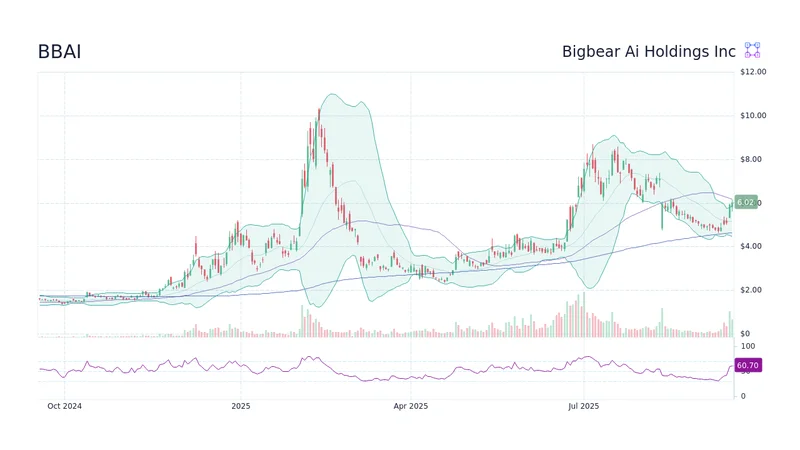
It’s easy to get lost in the noise. Wall Street is a cacophony of panicked whispers and triumphant shouts, all centered on the daily, hourly, even momentary fluctuations of the market. A stock jumps 15% in after-hours trading, and the celebration begins. The next day, a headline screams about widening losses and sliding revenue, and the narrative flips to doom. This is the dizzying reality for anyone watching BigBear.ai (BBAI) right now. One minute it’s the next Palantir, soaring 452% over three years; the next, it’s a warning, a stock where “investors might end up getting burned,” leaving many to wonder, Is BigBear.ai a Buy?
But I want you to step back with me, to quiet the noise and look past the flashing red and green tickers. What if the story everyone is telling is the wrong one? What if we’re all watching a caterpillar, meticulously counting the leaves it’s eating, and completely missing the fact that it’s building wings? When I saw the news about the Ask Sage acquisition, I honestly had to read it twice. This isn't just another line item on a press release; it's a declaration of intent. It’s a signal so powerful that it makes the hand-wringing over last quarter’s numbers feel almost comically shortsighted.
The Price of a Metamorphosis
Let’s get the bearish arguments out of the way, because they aren’t wrong—they’re just incomplete. Yes, BigBear.ai’s Q2 sales fell by 18%. Yes, they had to lower their 2025 revenue guidance. And yes, the company is unprofitable, with losses widening. The analysts see this and shout, “The model is broken!” But I look at the same data and ask a different question: What if the model is being deliberately dismantled to build something better?
Think about it. The reports flag a 23% increase in R&D spending as a primary reason for those widening losses. They call it a “cost.” But let’s be clear, this isn’t a cost, it's an investment, pure and simple. It’s the fuel for the engine they are building for tomorrow, not a leak in the tank of yesterday. This is the kind of pivot that reminds me why I got into this field in the first place. You don’t build the future by optimizing the past. Sometimes, you have to burn the old ships to take the new island.
This is a company in the middle of a profound metamorphosis. Judging it on the metrics of its old self is like criticizing a construction site for being messy and loud. The real question isn’t “Why are sales from the old model declining?” The real question is, “My God, what are they building?”
A New Brain for the Digital Age
And that brings us to Ask Sage. This isn’t just an acquisition; it’s a heart transplant. BigBear.ai is buying a “generative artificial intelligence platform for secure distribution.” Now, that sounds like a mouthful of corporate jargon, so let’s break it down—in simpler terms, it means they are acquiring a system to create and safely deploy powerful AI tools for their clients, particularly their government and defense contracts.
This is a complete paradigm shift. The company that was known for data analytics—for looking at what has happened—is now retooling to become a platform for generative AI, for creating what could happen. This is the technological equivalent of a historian suddenly becoming a science fiction author. They aren't just buying a piece of software; they're buying a new brain, a new central nervous system for their entire operation and it’s going to allow them to leapfrog competitors in ways the market simply can’t price in yet.
Imagine you’re a general in the field. You don’t just want an analysis of last week’s satellite images. You want an AI that can generate a dozen potential enemy strategies for tomorrow, model the outcomes, and do it all on a secure, closed network. That’s the future BigBear.ai is buying. It’s a move from reactive analysis to proactive creation.
Of course, with this power comes immense responsibility. Building platforms for secure, distributed AI means the ethical guardrails have to be stronger than the code itself. How do we ensure these tools are used for protection and not for preemption? That’s a conversation we need to be having right alongside the technical one. But the potential here, the sheer scale of this ambition, is breathtaking.
This Is What Vision Looks Like
The market is reacting to a snapshot, but visionaries invest in the motion picture. The analysts who see an expensive stock with a price-to-sales ratio of 13 are missing the denominator of that equation. They’re dividing the price by the sales of the old company. The real question is, what will the sales of the new company look like in three years? When Netflix was burning billions to leave DVDs behind and build a global streaming empire, its balance sheet looked terrifying. But those who understood the vision weren't buying a company that mailed discs; they were buying the future of entertainment.
I was scrolling through a forum the other day and saw a comment that just nailed it: “Everyone's mad that the caterpillar is eating all the leaves, completely ignoring the fact that it's building wings.” That’s where we are now. The market is focused on the leaves. But for those of us willing to look a little closer, you can just start to see the outline of wings. It’s a risky bet, to be sure. But betting on the future always is.